
The Verdict Is In: Trump Lost and America Won
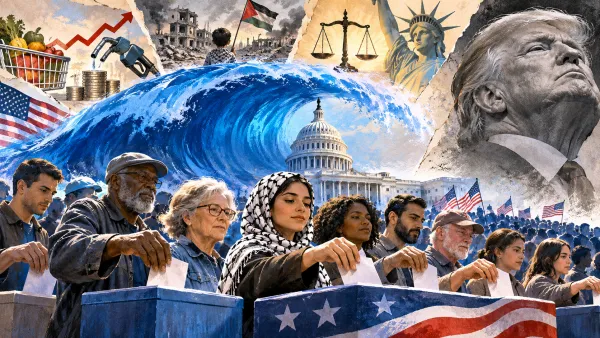
The American people have spoken, loud and clear. And their message could not have been more unmistakable: enough is enough.
Enough of corruption, racism, fear, and intimidation. Enough of politicians who mistake loyalty to one man for loyalty to their country. Enough of a Republican Party whose submissiveness and cowardice have allowed Donald Trump to govern as though America were his personal property.
I want to call it a Bluenami, a blue tsunami. This election was a referendum on Trump, his policies, his approach to governing, and the politicians who enabled him.
For two years, Trump has made one thing clear: if you refuse to accept his version of events, you simply do not count. Disagree with him, and you become an enemy. Challenge him, and you become a target. Well, he was wrong. Very wrong.
Americans are fundamentally decent people. They may disagree on politics, religion, and foreign policy, but they can see through the fog of lies, fear, and manipulation.
In 2024, millions believed Trump’s promises. He would end wars, bring prosperity, lower prices, and make America respected again. Instead, he took America into another war on behalf of Israel, a country increasingly isolated over its Genocide in Gaza. Meanwhile, ordinary Americans continued struggling with grocery bills, gasoline prices, and the rising cost of living.
And what happened to America’s international reputation? According to the 2026 Democracy Perception Index, the United States recorded a net perception score of -16, placing it alongside some of the world’s least favorably viewed countries: Israel (-24), North Korea and Afghanistan (-19), and Iran (-17).
What a remarkable company for the world’s most powerful democracy. Trump promised to make America respected again. Apparently, he confused respect with fear.
The emerging electoral map tells a remarkable story.
Consider Abdul El-Sayed, who ran for Michigan’s open Senate seat. Abdul possessed all the “wrong” ingredients, at least in Trump’s eyes: a Muslim of Arab heritage, despite him being born and raised in Michigan, and unapologetically opposed to what he describes as the genocide in Gaza.
Trump and his Republican allies attacked his religion, ancestry, and family, circulating accusations of extremism without substantiated evidence. Trump even suggested El-Sayed should pass through a metal detector before entering the Senate.
Abdul’s response was priceless. He reportedly agreed, provided Trump submitted to a lie-detector test answering two questions: What was his relationship with Jeffrey Epstein? And who won the 2020 election?
Sad? Certainly. But one cannot help laughing at the absurdity. When did being Muslim, Arab, or outspoken about Palestinian rights become grounds for questioning an American candidate’s loyalty?
Michigan was hardly alone.
Ohio, my home state, delivered three remarkable results. Sherrod Brown defeated Jon Husted, returning a familiar Democratic voice to the Senate. Meanwhile, Amy Acton defeated Vivek Ramaswamy, becoming Ohio’s first woman governor and ending two decades of Republican control. Ramaswamy appeared convinced that Ohioans would embrace his arrogance and political rhetoric. They were evidently less impressed than he anticipated. And Don Leonard, flipped Ohio’s District 15 seat, which was controlled by Republicans since 2011. Kudos to Ohio.
In Maine, Troy Jackson defeated Susan Collins, ending her thirty-year Senate career. Jackson had condemned Israel’s actions in Gaza as genocide and called Netanyahu a war criminal. Collins, meanwhile, consistently supported substantial American military assistance to Israel. Her position on Gaza was only one part of her political record, but the contrast was unmistakable.
Then came Texas. Gina Hinojosa defeated Greg Abbott, challenging Republican control of the governor’s office dating back to 1995. James Talarico also won the Senate race, ending decades of Republican dominance in statewide politics. Talarico distinguished himself by challenging Islamophobia and engaging directly with Muslim voters.
Imagine that. Treating Muslim Americans as citizens deserving respect rather than convenient political targets.
South Carolina also witnessed a political upset, with Annie Andrews defeating Darlene Graham. Apparently, a familiar political surname was not enough to guarantee victory.
Kansas broke nearly a century of political tradition with Hamilton’s reported Senate victory, while Keisha Lance Bottoms won Georgia’s governorship, marking the first Black woman elected governor of a US state, a milestone in American politics.
Different states, different candidates, different circumstances. Yet a common message emerged: political power is borrowed, not owned.
Gaza Was Part of the Verdict
There is another dimension to this election that deserves attention. Gaza was part of the verdict. I do not suggest Gaza alone determined the outcome. Americans voted for many reasons: economic hardship, corruption, foreign wars, political intimidation, and dissatisfaction with Trump’s leadership.
But I believe Gaza was an important part of that broader rejection.
For more than two years, Americans watched the devastation unfold. Destroyed neighborhoods. Displaced families. Wounded children. Parents searching through rubble for their loved ones, and Genocide happening in real time. And they watched their government continue providing military assistance to Israel.
For many Americans, Gaza became more than a foreign-policy issue. It became a moral question.
How can America champion human rights while supporting policies that contribute to civilian suffering elsewhere? Why should criticizing Israel or questioning American military assistance invite accusations of disloyalty or antisemitism?
AIPAC and affiliated political organizations spent substantial sums influencing congressional races, supporting candidates aligned with their positions and opposing others. In Michigan alone, they spent over 350 million dollars to defeat El-Sayed. They lost.
Americans have every right to question the influence of powerful political organizations and whether elected officials represent their constituents or their financial supporters.
The campaigns of El-Sayed, Jackson, and Talarico illustrated how Gaza, religious prejudice, and foreign policy entered the political debate.
The verdict is in. There is a tendency among politicians who accumulate power to forget a simple truth: power belongs to the people. The president does not own the White House. Senators do not own their seats. Governors do not own their states. And political parties do not own their voters.
Trump and his allies spent years demanding loyalty, vilifying critics, and presenting disagreement as betrayal. They appeared convinced that intimidation could replace persuasion and political power could shield them from accountability.
The emerging results suggest otherwise. Americans voted with their wallets, their consciences, their frustrations, and their hopes. Some voted because of the economy. Others because of the wars. Others were tired of the insults, division, and endless political theatrics. And yes, some voted because of Gaza.
Different motivations converged in an election that challenged the direction of the country.
Trump made this election about himself. The American people made it about their country.
America won. Trump and AIPAC lost. And Trump is a lame-duck president.